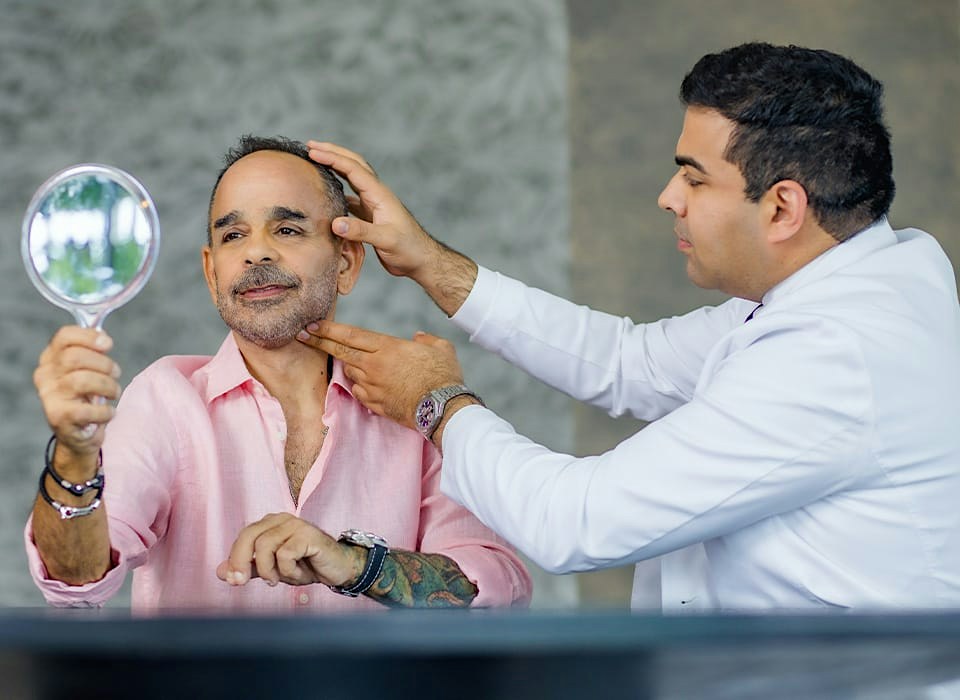
Experience a Youthful Transformation with a Deep Neck Lift at Chopra Plastic Surgery

Facial aging impacts everyone differently, and the neck often shows the earliest signs of aging, such as loose skin, visible banding, or fullness beneath the chin. However, poor neck definition is not solely a result of aging; many younger patients with a healthy weight may have a fuller or softer neck due to their inherent anatomy.

A deep neck lift addresses these concerns at their source, resulting in a more contoured neck and a sharper jawline, all while maintaining your natural appearance. 

Dr. Karan Chopra is a board-certified plastic surgeon trained at Johns Hopkins, who focuses exclusively on facial and neck procedures. This specialization informs his approach to the deep neck lift in Miami. He considers every layer that affects your neck's contour, not just the skin visible in the mirror.

During your consultation, Dr. Chopra will evaluate your anatomy in person to determine whether a deep neck lift or a more conservative option is best suited to meet your goals.

What Is a Deep Neck Lift?

A deep neck lift is a neck contouring surgery that treats the structures beneath the platysma, the thin sheet of muscle running from the collarbones to the lower face. Published research in Seminars in Plastic Surgery describes three surgical planes in the neck:

  • Superficial plane: The layer of fat directly beneath the skin.
  • Intermediate plane: The platysma muscle and the fat between its edges.
  • Deep plane: The fat beneath the muscle, the digastric muscles, and the submandibular glands.

A traditional neck lift focuses on the upper layers. It tightens the platysma and removes excess skin and surface fat. According to a review titled Deep Neck Contouring: Indications and Techniques, approaches limited to those layers can leave deeper contributors untreated and may create contour problems that are difficult to correct later (PubMed). A deep neck lift allows Dr. Chopra to sculpt these deeper tissues whenever they contribute to fullness.


Banner media

Structural Causes of Poor Neck Definition in Younger Patients

In younger, normal-weight patients, poor neck definition is typically structural rather than age-related. Key sources of fullness under the chin include the submandibular glands, fat beneath the platysma, and the front portion of the digastric muscle, which do not respond to weight loss.

Fat Beneath the Platysma Muscle

  • Subplatysmal fat lies deeper than the fat that liposuction can reach
  • When this compartment is full, the area beneath the chin can look rounded, even in lean patients
  • Dr. Chopra sculpts this fat conservatively rather than removing it all
  • A review of 641 cases emphasizes that removing too much of this central fat can leave the neck looking hollow or skeletonized (PMC)

Enlarged or Descended Submandibular Glands

  • The submandibular salivary glands sit just below the jawline on each side of the neck
  • When these glands are large or positioned low, they create a bulge that blurs the edge of the jaw
  • Careful contouring of the gland can restore a cleaner jawline
  • Dr. Chopra explains this step in detail in his blog on submandibular gland contouring

Prominent Digastric Muscles

  • The front bellies of the digastric muscles run in two strips beneath the chin
  • When these muscles are bulky, they add fullness under the chin
  • Bulky digastric muscles can also show as vertical ridges once the overlying fat is removed
  • Reducing only the prominent portion of each muscle helps create a smooth, natural contour under the chin

Platysmal Banding

  • Platysmal bands form when the inner edges of the platysma separate in the center of the neck
  • This separation creates vertical cords that may be visible at rest or with movement
  • These bands can appear at any age, including in younger patients with little excess skin
  • Tightening the muscle at the midline smooths the bands and supports the deeper tissues

Chin Projection and Hyoid Position

  • Skeletal structure also shapes the neck
  • A layered review of neck anatomy notes that the deep layer includes bony support structures in addition to fat, muscle, and glands (Plastic and Aesthetic Research)
  • A less projected chin or a low-positioned hyoid bone can soften the angle between the chin and neck
  • When chin projection is a factor, Dr. Chopra may recommend chin augmentation alongside a deep neck lift
Background media

Benefits of a Deep Neck Lift

The main benefit of a deep neck lift is that it treats the actual cause of neck fullness rather than surface fat alone.

Additional benefits include:

  • A sharper, more defined angle between the chin and neck
  • Clearer jawline definition from the ear to the chin
  • Smoother appearance of visible platysmal bands
  • Long-lasting results when paired with a stable weight
  • Single-incision access beneath the chin for select patients
  • Natural-looking results tailored to your facial proportions
woman in black long sleeve smiling

Who is a Good Candidate For Deep Neck Surgery?

Good candidates for a deep neck lift in Miami are patients whose neck contour is shaped by skin, muscle, or deeper structures that diet, exercise, and liposuction cannot change.

You may be a candidate if you:

  • Notice loose skin, reduced muscle tone, or visible bands in the neck and jawline
  • Have fullness under the chin that remains despite a stable, healthy weight
  • Are younger and have a naturally soft angle between the chin and neck
  • Previously had neck liposuction without the definition you hoped for
  • Are in good overall health, do not smoke, and have realistic expectations

Deep Neck Lift vs. Neck Liposuction and Other Alternatives

A deep neck lift is Dr. Chopra's preferred approach when neck fullness comes from beneath the platysma. Depending on your anatomy, other options may also be appropriate:

  • Neck Liposuction: Suited to patients whose fullness comes mainly from fat just under the skin and who have good skin elasticity. It does not treat deeper structures.
  • Mini Neck Lift: Addresses mild skin laxity when deeper fullness is minimal.
  • Deep Plane Facelift: Recommended when jowls and midface changes are also a concern. It is often combined with a deep neck lift.
  • Chin Augmentation: Improves chin projection and is frequently paired with neck contouring.
Doctor media
Doctor media
Doctor media

Consultation and Cost of a Deep Neck Lift in Miami

Your consultation starts with Dr. Chopra examining your neck at rest and in motion. He evaluates skin quality, fat distribution, gland position, muscle prominence, and chin projection before recommending a plan. Out-of-town patients can begin with a telehealth visit, and MyPreOp offers convenient virtual surgical clearance.

The cost of a deep neck lift is based on your personalized surgical plan. Factors that influence cost include:

  • The incision approach Dr. Chopra recommends
  • Which deep structures require treatment
  • Any combined procedures, such as a facelift or chin augmentation
  • Anesthesia and facility fees

Cosmetic procedures are generally not covered by insurance. The practice offers financing through Cherry and CareCredit to help you plan comfortably.

The Deep Neck Lift Procedure Step by Step

On the day of your deep neck lift, you will receive the anesthetic you and Dr. Chopra selected. Some patients prefer a lighter level of sedation, such as "twilight," while others prefer general anesthesia. Either way, the team's goal is to keep you comfortable throughout the procedure, which typically takes two to three hours.

Dr. Karan Chopra selects the incision pattern based on your anatomy rather than a standard template. His goal is to use the least extensive approach that fully addresses what is shaping your neck.

Single Under-Chin Incision

  • Some younger patients with good skin elasticity may qualify for a deep neck lift through a single small incision in the natural crease beneath the chin
  • This approach requires no incisions behind the ears
  • Cleveland Clinic describes a similar under-chin approach that avoids skin removal and incisions near the ear (Cleveland Clinic)
  • Through this single opening, Dr. Chopra can treat deep fat, glands, digastric muscles, and the platysma
  • View results in theSingle-Incision Deep Neck Lift gallery

Combined Under-Chin and Behind-the-Ear Approach

  • Patients with excess skin or more significant laxity typically benefit from the under-chin incision combined with discreet incisions behind the ears
  • Dr. Chopra first treats the deeper structures through the incision under the chin
  • He then uses the incisions behind the ears to lift and redrape the skin and remove any excess
  • Unlike a standard neck lift, this procedure lets Dr. Chopra address the submandibular salivary glands, digastric muscles, and deep neck fat as needed to refine the overall result
  • After the lifting and tightening are complete, he closes the incisions with sutures
  • You then move to the recovery area
Background media

About Post-Treatment Care

Some discomfort is normal after a deep neck lift, and the team will provide everything you need to manage it. You will receive clear aftercare instructions and a schedule of follow-up visits so Dr. Chopra can monitor your healing. Many patients note that he personally calls to check on them in the days after surgery.

Patients who want extra support can book the Overnight Caretaker Service, which includes one-on-one monitoring through your first night. A typical recovery timeline looks like this:

  • First week: Swelling and bruising peak, then begin to subside. Rest with your head elevated.
  • One month: Swelling is significantly reduced, and your new contour becomes easier to see.
  • Four to five weeks: Most patients fully return to normal activities.
  • Three to four months: Final results become apparent as residual swelling resolves.
greyscale of small boat out at sea

Why Choose Dr. Chopra For Your Neck Lift Procedure?

Dr. Karan Chopra completed his plastic surgery training at Johns Hopkins Hospital, followed by a dual aesthetic and oculoplastic fellowship with Dr. Mark Codner. He also trained with Dr. Bryan Mendelson, an internationally respected leader in facelift surgery. This training informs the anatomy-first approach behind his deep neck lift in Miami.

Board-certified by the American Board of Plastic Surgery, Dr. Chopra serves as a Clinical Professor of Plastic Surgery at the University of Miami. He received the Miller-Coulson Academy Award for Clinical Excellence and was named one of the Top 10 Plastic Surgeons in Florida in 2024 and 2025. Peers know him as "the surgeon's surgeon."

Procedures are performed in an AAAHC-accredited facility, and Dr. Chopra remains personally involved from consultation through recovery. Patients from across the country travel to his Miami practice for this level of focused expertise in facial and neck care. Contact us today to book your consultation and learn more.

Disclaimer: This information is provided for educational purposes only and does not replace a consultation with a board-certified plastic surgeon. Outcomes, risks, and suitability vary from patient to patient.

Frequently Asked Questions Deep Neck Lift

How Long Does a Deep Neck Lift Procedure Usually Take?

A deep neck lift typically takes between two and three hours. The exact time depends on your personal needs and the complexity of your treatment plan.

Is the Deep Neck Lift Outpatient Surgery?

Yes. The deep neck lift is usually performed as an outpatient procedure, so you can return home the same day once the anesthesia wears off. You will need someone to drive you home, or you can arrange the practice's Overnight Caretaker Service.

How Long Does the Swelling Last After a Deep Neck Lift?

Swelling often begins to subside after the first week and is significantly reduced after a month. Residual swelling continues to resolve over three to four months as your final contour settles.

Will the Procedure Eliminate All Wrinkles on My Neck?

A deep neck lift significantly reduces loose skin and improves neck contour, but it may not eliminate every line. Skin elasticity, sun exposure, and age influence the final outcome. Dr. Chopra may suggest complementary skin treatments for fine lines.

What Can I Do to Minimize Scarring?

Following your aftercare instructions, especially regarding incision care, is the best way to minimize scarring. Protecting the incisions from sun exposure also helps them fade over time. Dr. Chopra places incisions in the natural crease beneath the chin and, when needed, behind the ears, where they are well concealed.

Are There Non-Surgical Alternatives?

Non-surgical treatments such as Morpheus8 and Forma can improve skin texture and mild laxity on the neck. They cannot treat deep fat, glands, or muscle, so surgery typically produces the most meaningful results for structural fullness or significant loose skin.

Can a Deep Neck Lift Be Combined With Other Procedures?

Yes. A deep neck lift is often performed alongside a facelift, eyelid surgery, or chin augmentation for comprehensive results. Dr. Chopra will discuss combination options during your consultation.

Can Younger Patients Get a Deep Neck Lift?

Yes. Younger patients with good skin elasticity are often excellent candidates when their fullness comes from deep fat, glands, or muscle rather than aging. Some may qualify for a single incision beneath the chin, with no incisions behind the ears.

Will I Have Scars Behind My Ears?

Not always. Dr. Chopra selects the incision pattern based on your anatomy. Patients with minimal excess skin may need only an incision under the chin, while those with greater laxity typically require additional incisions behind the ears to remove skin.

Does Submandibular Gland Contouring Affect Saliva Production?

Gland contouring typically reduces only the portion of the gland that protrudes below the jawline. Dr. Chopra covers how this affects saliva in his blog, Submandibular Gland Contouring in a Deep Neck Lift.

What Are the Risks of a Deep Neck Lift?

Like any surgery, a deep neck lift carries risks. These include bleeding, hematoma, infection, prolonged swelling, contour irregularities, temporary numbness, and temporary weakness of the nerve that controls lower lip movement. Choosing a highly trained surgeon and following aftercare instructions helps minimize these risks.

Logo media
Contact us media

*Real Patient

Accessibility: If you are vision-impaired or have some other impairment covered by the Americans with Disabilities Act or a similar law, and you wish to discuss potential accommodations related to using this website, please contact our Accessibility Manager at (305) 209-8811.
Schedule a Consultation