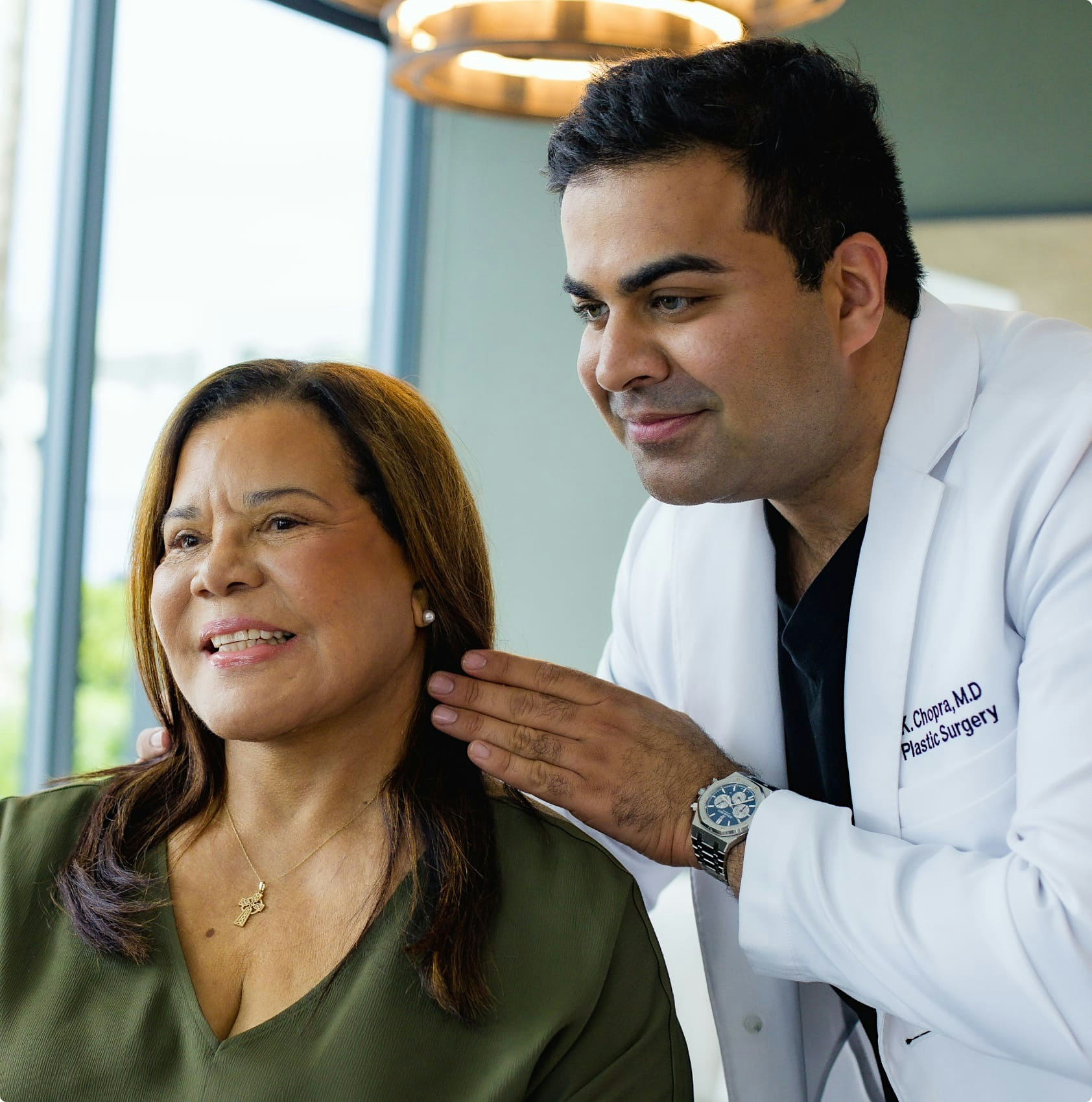


Beauty Uncompromised Request a Private Consultation
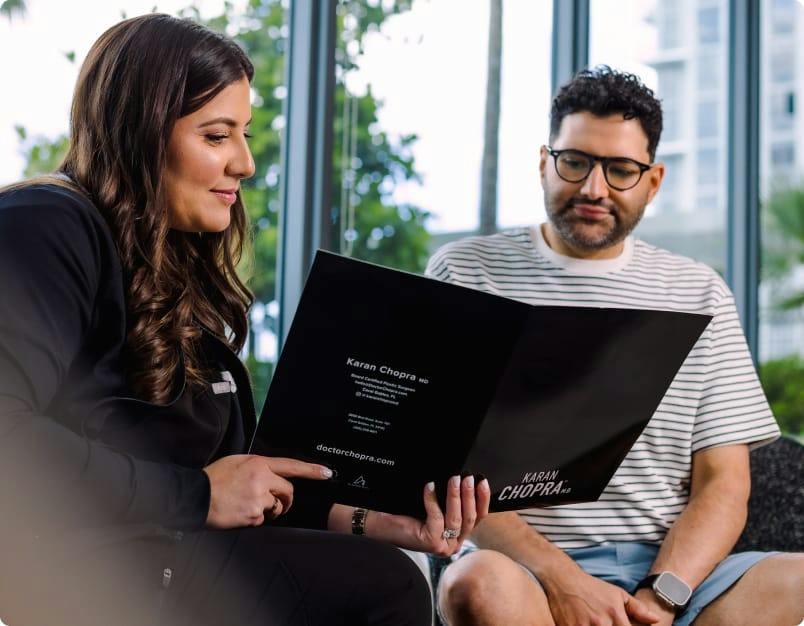


Readiness for a facelift revision comes down to three things: your original healing is complete, you can name exactly what still bothers you, and you're working with a surgeon who treats revision work as a specialty, rather than an occasional case. Dr. Karan Chopra is a board-certified plastic and reconstructive surgeon in Miami who trained at the R. Adams Cowley Shock Trauma Center and Johns Hopkins Hospital. His practice is built exclusively around facial and neck procedures, including corrective work on facelifts performed elsewhere, so a second facelift is never unfamiliar territory for him.
In this blog, Dr. Chopra draws on that focused experience to walk through the physical, emotional, and practical signs that you're ready for a revision facelift.
A revision facelift corrects or refines the results of a previous surgery, from surgeries that fell short of expectations to ones that simply aged the way any facelift eventually does. Timing matters as much as the decision itself. Move too early, before your tissue has settled, and you risk chasing a problem that would have resolved on its own. Wait too long, and loose skin and scar tissue can make the correction more complicated than it needed to be. Readiness sits between those two extremes.
Before any revision conversation is useful, your tissue needs real time to settle. Early firmness and swelling that comes and goes can look like permanent problems when they're actually just part of healing. Dr. Chopra typically sees revision patients for an initial evaluation around six months after their original surgery, with the revision procedure itself scheduled closer to the one-year mark, once swelling and scar tissue have had time to settle.
Cleveland Clinic notes that most surgical scars take 12 to 18 months to fully mature, which is part of why the extra patience pays off. You're likely still healing and not yet ready for an evaluation if:
Once those signs fade, you're in a good position for an evaluation, and Dr. Chopra will tell you honestly whether more time should pass before surgery itself.
A few specific problems come up often enough in revision consultations to call out individually:
The right correction depends on exactly what the original surgery did and how your tissue has healed since.
Readiness isn't only physical. Patients get the most out of a revision when they arrive with specific concerns, rather than a general sense that something is off. A heavy neck that never improved reads differently to a surgeon than a vague feeling of dissatisfaction, so the more precisely you can describe what bothers you, the better Dr. Chopra can plan around it. It also helps to separate what frustrated you about the first surgery from what you want the second one to accomplish, since those answers aren't always the same. For a closer look at the patterns he most often sees in revision patients, Signs You May Need a Revision Facelift breaks several of them down in detail.
Because many of his revision patients had their original surgery performed elsewhere, Dr. Chopra starts by reviewing exactly what was done, often working from whatever records are available, before examining how your tissue has responded since. He talks candidly about what a revision can realistically achieve given your anatomy. Patients are sometimes surprised that the honest answer is a smaller correction than expected, or occasionally none at all. Other surgeons have nicknamed him "the surgeon's surgeon," in part because of that willingness to tell patients the truth, the same standard behind his board certification through the American Board of Plastic Surgery.
Revision recovery follows a similar arc to a first facelift, with the most noticeable swelling and bruising easing over the first two to three weeks. Facelift Recovery Week by Week walks through that timeline in more detail. Scar tissue from the original surgery can sometimes extend healing slightly, and Dr. Chopra sets expectations specific to your plan during the consultation.
Knowing you're ready for a revision facelift isn't about reaching a certain date on the calendar. It's about healed tissue, a clear sense of what you want corrected, and a surgeon who treats this work as his focus. Dr. Chopra built his Miami practice around exactly these conversations. Schedule a consultation with Dr. Chopra to find out if now is the right time for you.
This information is provided for educational purposes only and does not replace a consultation with a board-certified plastic surgeon. Outcomes, risks, and suitability vary from patient to patient.