


Beauty Uncompromised Request a Private Consultation



Buccal fat pad reduction has gone from a niche surgical option to one of the most searched cosmetic procedures online. However, popularity is not the same as universality, and a trending procedure is not, in itself, a reason to pursue it.
The procedure itself is straightforward: small incisions are made on the inside of the mouth, leaving no visible scarring, and a carefully determined amount of fat tissue is removed from the lower cheeks. The result is a slimmer midface, more visible cheekbone definition, and a contour that looks sculpted rather than operated on.
Dr. Karan Chopra's Johns Hopkins training and board certification in Facial Plastic and Reconstructive Surgery are paired with a practice dedicated exclusively to the face and neck. He understands not just how a result looks at six months, but how every structural change will age over decades. Here’s what Dr. Chopra would like you to know when considering whether buccal fat pad reduction is right for your aesthetic goals.
One of the most overlooked considerations in buccal fat removal is age. For example, the face naturally loses volume as we get older, and the fullness that feels excessive at 25 may become an asset at 45.
Generally speaking, patients in their mid-to-late 20s and beyond with stable weight and a fuller facial structure tend to be better long-term candidates than younger patients whose faces are still changing.
Patients who undergo buccal fat removal too early, particularly those who are already lean or who have a naturally narrow facial structure, run the risk of looking gaunt or hollow as they age. This is one of the primary reasons Dr. Chopra evaluates facial aging trajectory during consultations, not just current appearance.
The natural face shape plays a significant role in whether buccal fat removal delivers the result a patient hopes for. Patients who tend to benefit most have:
Alternatively, patients who may not be ideal candidates based on facial structure include those with:
Weight is directly related to facial fat distribution, including the buccal fat pads. If you're actively losing weight or haven't yet reached a comfortable, stable weight, it's generally best to wait. Here's why:
Arriving at this decision from a stable weight gives you—and Dr. Chopra—the clearest, most accurate picture of what your outcome will actually look like. That clarity is how we make sure the results are ones you'll love for life.
Buccal fat removal can produce a genuinely meaningful improvement in facial contour for the right patient, but it is not a dramatic transformation. It is also not a substitute for changes in weight, skin quality, or overall facial aging.
Patients who tend to feel most satisfied with their results:
Because Dr. Chopra's practice is dedicated exclusively to the face and neck, he approaches buccal fat removal not as an isolated request but as one element of overall facial harmony. For some patients, it's the only change they need; for others, the best result comes from pairing it with complementary treatments.
For example:
Before Dr. Chopra recommends any procedure, he conducts a thorough evaluation of your facial anatomy, health history, and long-term aesthetic trajectory. Several factors inform that assessment:
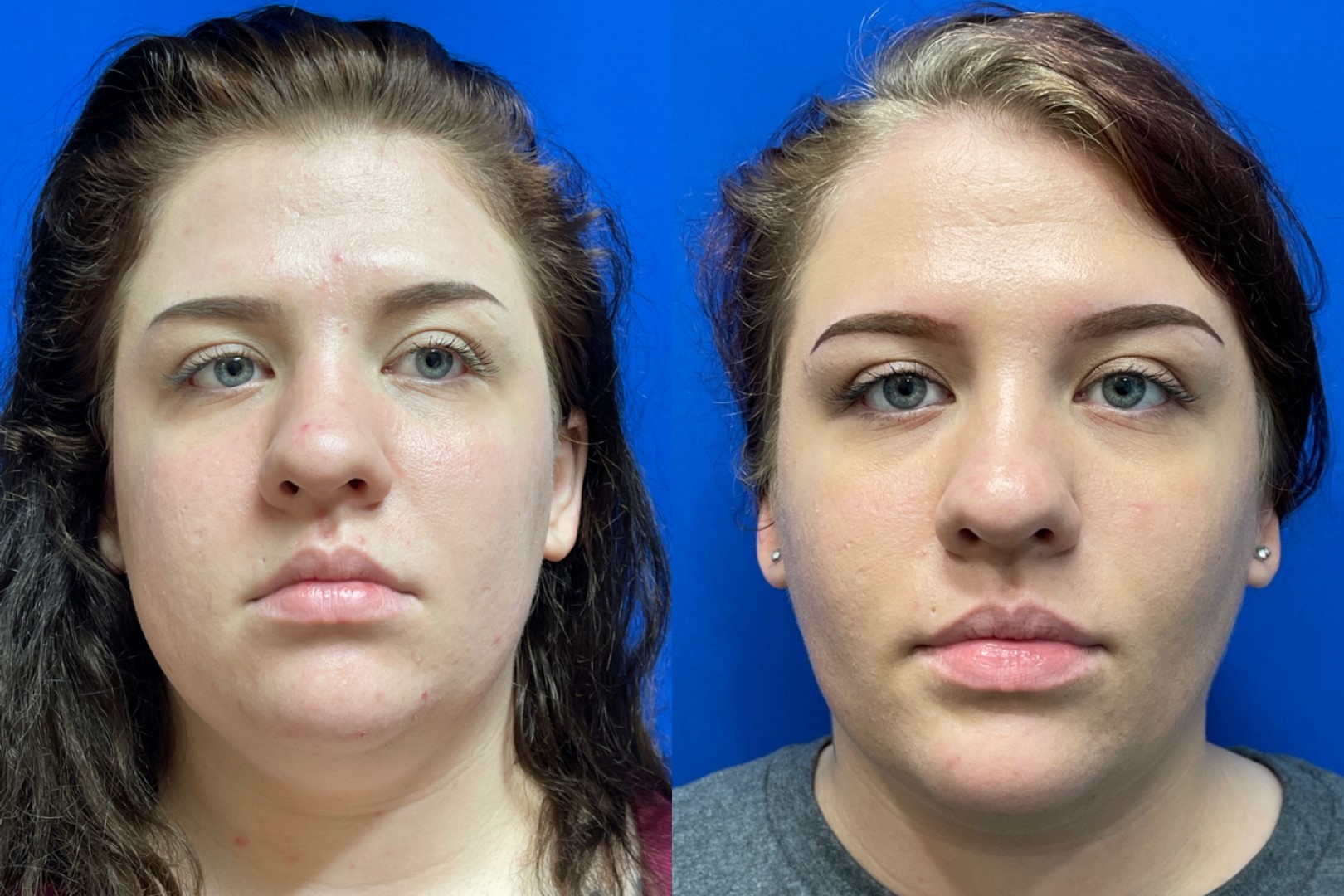
Dr. Chopra performed a buccal fat pad reduction for a 21-year-old patient who was seeking facial slimming and a more contoured lower-cheek appearance. Buccal fat pad reduction is designed to reduce excess fullness in the lower cheeks in carefully selected patients. In this case, the front-view photo best demonstrates the improvement in lower facial fullness and facial contour.
If you have been thinking about buccal fat removal and want a straightforward assessment of whether it makes sense for you, the best next step is a personal consultation with Dr. Chopra at Chopra Plastic Surgery in Miami. Schedule yours today.
Disclaimer: This information is provided for educational purposes only and does not replace a consultation with a board-certified physician. Outcomes, risks, and suitability vary from patient to patient.