

Beauty Uncompromised Request a Private Consultation

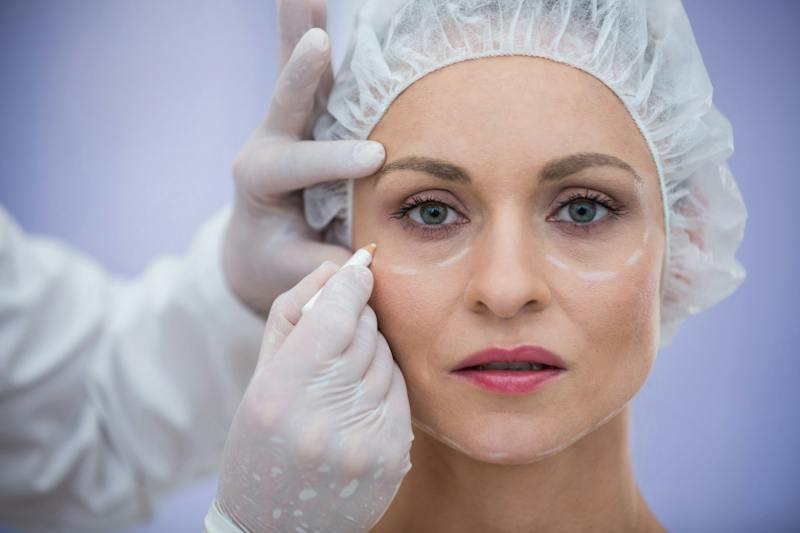
You likely need upper eyelid surgery if loose, hooded skin sits on your upper lids and makes you look tired or crowds your lash line. You likely need lower eyelid surgery if you have puffy bags, shadows, or crepey skin beneath the eyes. Many patients benefit from both, and a brief in-person exam settles which areas to treat.
Dr. Karan Chopra is a board-certified plastic surgeon in Miami who trained at Johns Hopkins and focuses his practice on the face. You can read more on his bio page. This article explains what each procedure treats, how to tell which one you need, who is a good candidate, and what recovery involves.
Eyelid surgery, also called blepharoplasty, is a facial procedure that removes or repositions excess skin, muscle, and fat around the eyes to create a more rested, open appearance. It can treat the upper lids, the lower lids, or both.
Upper eyelid surgery, or upper blepharoplasty, addresses loose, hooded skin on the upper lid that can make the eyes look tired or heavy, and in more advanced cases can crowd the lash line or sit in the way of your upper field of vision. Through an incision hidden in the natural crease of the lid, the surgeon removes a measured strip of excess skin and, when needed, a little muscle or fat, then closes the incision so the fine scar settles into the crease. You can read more on our upper eyelid lift page.
One important distinction: heavy upper lids are not always a skin problem. If the eyelid margin itself sits low over the eye, that is ptosis, which comes from a stretched or weak lifting muscle rather than excess skin, and it is corrected with a ptosis repair rather than skin removal alone. A thorough exam tells the two apart, because the surgical plan is different.
Lower eyelid surgery, or lower blepharoplasty, addresses puffiness and under-eye bags, the shadows they cast, and sometimes loose or crepey skin along the lower lid. Much of the puffiness comes from fat that has shifted forward, so the fat is often repositioned to smooth the transition between the lid and the cheek, or carefully reduced. When only fat needs attention, the incision can be placed inside the lid, where it leaves no visible scar. When excess skin is also removed, the incision sits just below the lash line. See our lower eyelid lift page for more detail.
A simple way to start is to look in a mirror in even light with your face relaxed. Heaviness, folding, or skin resting on your lashes points to the upper lid. Puffiness, bags, or shadows below the eye point to the lower lid. It is common to have features of both.
There is one more factor worth checking. A drooping brow can push skin onto the upper lid and mimic excess eyelid skin, in which case lifting the eyelid alone would not fully address the heaviness, and a brow lift may be the better tool or a useful complement. This is a common point of confusion, and it is exactly the kind of thing an exam is meant to sort out. When heavy upper-lid skin genuinely interferes with vision, part of the procedure may be considered functional rather than purely cosmetic, which is worth raising at your consultation since coverage rules vary.
Good candidates are generally healthy adults bothered by tired, heavy, or aging eyes who have realistic expectations about what the surgery can and cannot do. Eyelid surgery refreshes the eye area. It does not change your underlying facial structure or stop the eyes from aging.
You may be a good candidate if:
You have excess upper-lid skin, under-eye bags, or both that bother you.
You are in good general health without conditions that impair healing.
You do not smoke, or you are willing to stop before and after surgery.
Your eyes are healthy. Conditions such as significant dry eye, thyroid eye disease, or glaucoma do not necessarily rule you out, but they need evaluation first.
Because the eyes are delicate and the margin for error is small, the surgeon matters. Confirm that facial surgery is their focus and that they are certified by the American Board of Plastic Surgery, the board recognized by the American Board of Medical Specialties. At Chopra Plastic Surgery, eyelid surgery is performed as part of a face-focused practice in Miami.
Eyelid surgery is usually an outpatient procedure, and most patients describe it as one of the more comfortable facial surgeries, with discomfort that is generally mild. Expect bruising and swelling around the eyes in the first several days, eased with cold compresses and head elevation, along with some temporary dryness or blurriness from lubricating ointment.
A typical arc looks like this:
First few days: bruising and swelling peak, with rest at home.
About one week: any external sutures are removed, and many people return to desk work, often with a little makeup to cover residual bruising.
About 10 to 14 days: most patients feel comfortable in public, as the American Society of Plastic Surgeons notes, with final refinement continuing over the following weeks.
Plan to avoid strenuous activity for a couple of weeks, and protect the healing skin from the sun, since sun protection helps preserve the result over the long term.
The goal of eyelid surgery is to look like a more rested version of yourself, not an operated one. That comes from removing or repositioning the right amount of tissue and no more. Taking too much upper-lid skin can leave the eyes looking hollow or make them hard to close, and over-aggressive lower-lid surgery can pull the lid downward, so conservative, anatomy-based judgment is what protects a natural look. Patients who had too much removed elsewhere sometimes seek a revision, which is more complex than a first procedure because the tissue has already been altered. The most reliable path to a natural result is careful planning with a surgeon experienced in the eye area from the start.
What is the difference between upper and lower eyelid surgery?
Upper eyelid surgery removes loose, hooded skin, and sometimes a little fat or muscle, from the upper lid to open up a tired-looking eye. Lower eyelid surgery addresses puffiness and under-eye bags, usually by repositioning or reducing fat, and sometimes by removing excess lower-lid skin. They solve different problems, and many patients choose to treat both at the same time.
Is eyelid surgery painful?
Most patients find eyelid surgery to be one of the more comfortable facial procedures. There is typically mild discomfort rather than significant pain, and many people manage it with acetaminophen (Tylenol) and cold compresses. Bruising and swelling around the eyes are the more noticeable parts of recovery, and both fade over the first couple of weeks as the area settles.
How long is the recovery after eyelid surgery?
Eyelid surgery is usually outpatient. Bruising and swelling are most noticeable in the first few days, external sutures are generally removed around a week, and most patients feel comfortable in public within about 10 to 14 days. Final refinement continues over the following weeks. Plans vary by person, so your timeline is reviewed at your consultation.
Will eyelid surgery get rid of my dark circles or crow's feet?
Not entirely. Eyelid surgery improves puffiness, bags, and excess skin, which can soften the shadows that contribute to a tired look. It does not erase pigment-based dark circles or the fine lines at the outer corner of the eye, which are better addressed with other treatments. A consultation can match the right approach to your specific concern.
How long do eyelid surgery results last?
If your eyes look tired no matter how much you rest, eyelid surgery may be the refresh you are looking for, whether that means the upper lids, the lower lids, or both. Dr. Chopra and our team at Chopra Plastic Surgery will examine your eye area and explain which approach fits your anatomy and goals. Schedule your consultation with Dr. Chopra in Miami today.
This article is for general education and is not medical advice. Individual results vary. Please consult a board-certified plastic surgeon about your specific situation.
Upper eyelid surgery removes loose, hooded skin, and sometimes a little fat or muscle, from the upper lid to open up a tired-looking eye. Lower eyelid surgery addresses puffiness and under-eye bags, usually by repositioning or reducing fat, and sometimes by removing excess lower-lid skin. They solve different problems, and many patients choose to treat both at the same time.
Most patients find eyelid surgery to be one of the more comfortable facial procedures. There is typically mild discomfort rather than significant pain, and many people manage it with acetaminophen (Tylenol) and cold compresses. Bruising and swelling around the eyes are the more noticeable parts of recovery, and both fade over the first couple of weeks as the area settles.
Eyelid surgery is usually outpatient. Bruising and swelling are most noticeable in the first few days, external sutures are generally removed around a week, and most patients feel comfortable in public within about 10 to 14 days. Final refinement continues over the following weeks. Plans vary by person, so your timeline is reviewed at your consultation.
Not entirely. Eyelid surgery improves puffiness, bags, and excess skin, which can soften the shadows that contribute to a tired look. It does not erase pigment-based dark circles or the fine lines at the outer corner of the eye, which are better addressed with other treatments. A consultation can match the right approach to your specific concern.
Results tend to be long-lasting, because the procedure removes or repositions tissue rather than simply tightening the surface. Upper eyelid results often last many years, and lower eyelid surgery rarely needs to be repeated. Your eyes continue to age naturally over time, and consistent sun protection helps preserve the result for as long as possible.